
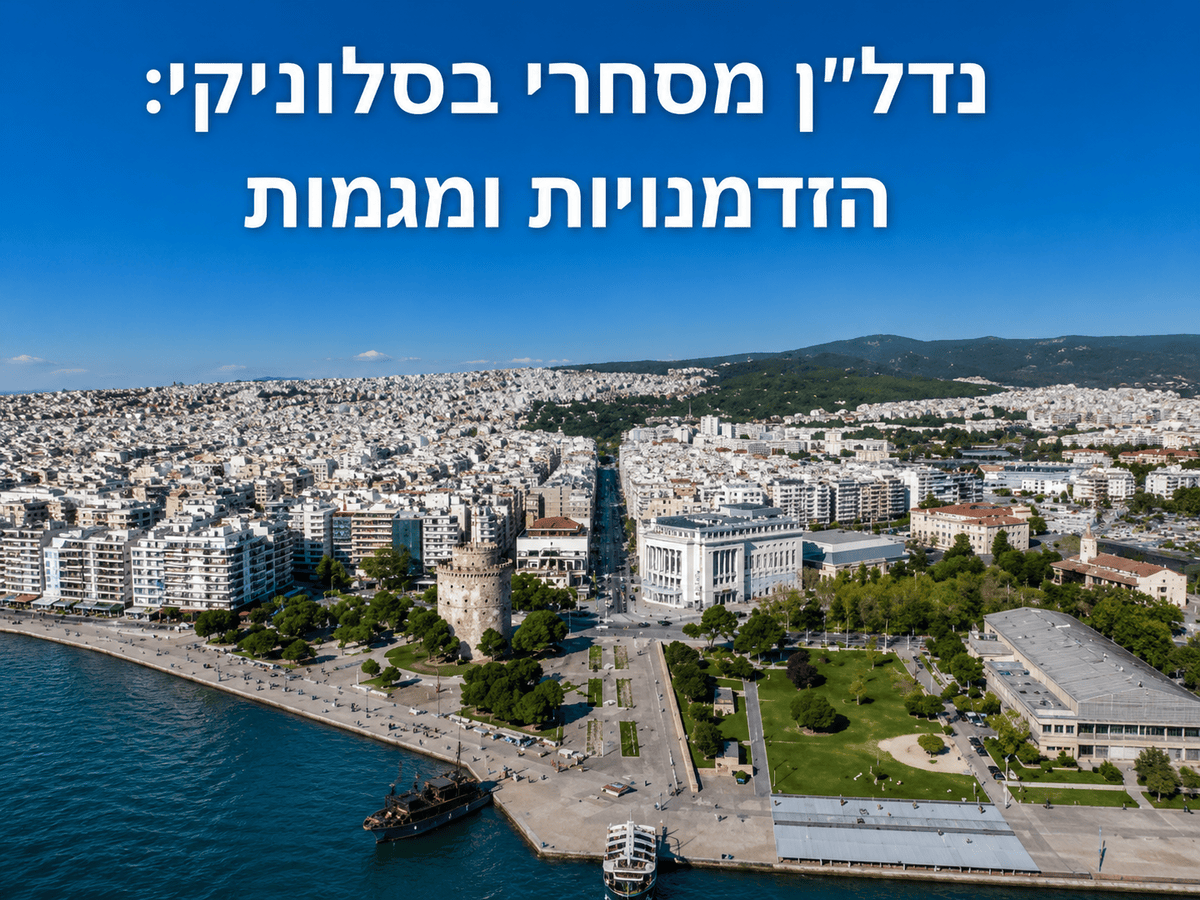
Thessaloniki, a city rich in history and vibrant with cultural dynamism, is quickly becoming more than just a cultural and economic center — it’s developing into a key destination for commercial real estate investment. The recent surge in economic activity in this Greek city has sparked demand for commercial real estate. This blog will thoroughly examine the current landscape of commercial real estate in Thessaloniki, analyze the emerging trends driving the market, and shed light on the abundance of investment opportunities this city generously offers.
Thessaloniki has experienced an impressive economic renaissance in recent years, breathing new life into its real estate sector, especially in the commercial domain. The city’s strategic location as a major port, along with its historical significance, has attracted renewed interest from businesses and investors alike. This economic momentum has translated into increased demand for commercial spaces, ranging from office complexes to retail shops.
Technological Integration: Thessaloniki’s commercial real estate landscape is embracing technological advancement. Smart office spaces, equipped with modern amenities, are becoming increasingly popular. From energy-efficient lighting systems to integrated security features, technology is both a luxury and a necessity in the modern commercial environment.
Co-working Spaces: The rise of remote work has spurred demand for flexible, collaborative workspaces. Thessaloniki is witnessing a rise in co-working spaces, catering to startups, freelancers, and established businesses seeking suitable office solutions.
Retail Renaissance: The city’s retail sector is undergoing a renaissance. Modern shopping complexes, boutique shops, and experiential retail spaces are gaining traction. Investors interested in Thessaloniki’s retail sector have an opportunity to contribute to the city’s evolving consumer landscape.
Cultural Hubs: Commercial spaces serving as cultural centers are gaining popularity. Businesses recognize the value of aligning with the city’s cultural vitality. This trend opens avenues for investments in spaces that can host events, art exhibitions, and other cultural activities.
Office Spaces: Demand for contemporary office spaces is trending upward. Investors can explore opportunities to develop or renovate office complexes catering to the evolving needs of businesses seeking modern, efficient work environments.
Retail Shops: Investing in well-located retail shops can be a profitable venture as the retail sector develops. Thessaloniki’s bustling streets and vibrant neighborhoods provide an ideal backdrop for businesses seeking high foot traffic.
Joint Ventures: The trend of flexible workspaces is here to stay. Investors can consider developing or investing in co-working spaces equipped with the latest technologies and amenities to attract a diverse range of tenants.
Cultural and Event Spaces: Thessaloniki’s cultural richness presents an opportunity for investments in spaces that can host cultural events. Turning commercial real estate into cultural hubs can be both financially rewarding and contribute to the city’s cultural scene.
Challenges and Considerations
While the prospects for commercial real estate investment in Thessaloniki are promising, savvy investors should be aware of potential challenges.
- Regulatory landscape: Understanding and navigating the local regulatory landscape is essential. Working closely with legal experts familiar with Greek real estate laws can help investors avoid pitfalls.
- Economic stability: Despite positive trends, global economic uncertainty can affect real estate market stability. Investors should closely monitor economic indicators and be prepared to adjust their strategies.
- Competition: As demand for commercial spaces rises, so does competition. Investors should conduct thorough market research to identify unique selling points and differentiate their offerings in a competitive market.
Thessaloniki’s emergence as a thriving hub for commercial real estate investment is a testament to the city’s resilience and economic revival. Investors eyeing this dynamic market have countless opportunities to explore, from innovative office spaces to culturally infused retail shops. By staying attuned to emerging trends, understanding the economic landscape, and diligently navigating potential challenges, investors can position themselves to reap the fruits of Thessaloniki’s flourishing commercial real estate. As the city continues to develop, so do the opportunities for those interested in shaping its commercial future.
Thessaloniki, in recent years, has undergone a remarkable economic transformation, establishing itself as a vibrant business hub. This awakening can be attributed to various factors, including proactive government reforms, strategic investments, and a skilled workforce. The city’s strategic location as a gateway to the Balkans, along with its solid infrastructure, make it an appealing destination for businesses. This economic transformation lays a solid foundation for a thriving commercial real estate market.
Government Reforms and Economic Stimulus
Government-led reforms have played a central role in Thessaloniki’s economic renewal. Initiatives aimed at streamlining bureaucratic processes, reducing red tape, and creating a favorable business environment have significantly contributed to attracting domestic and international investment. The Greek government’s commitment to economic stability has instilled confidence among businesses, fostering an environment conducive to growth.
Strategic Investments and Infrastructure Development
Strategic investments in infrastructure further empower Thessaloniki’s appeal as an economic hub. The city serves as a crucial entry point to the Balkan countries, positioning it as a key player in regional trade and commerce. Ongoing infrastructure projects, including transportation network improvements and port expansion, underscore the municipality’s commitment to facilitating smooth business activity. These developments not only improve Thessaloniki’s connectivity but also elevate its status as a strategic business location.

Skilled Workforce and Innovation
A skilled, dynamic workforce is a cornerstone of Thessaloniki’s economic success. The city’s educational institutions have played a central role in fostering talent, creating a pool of professionals skilled in various fields. This skilled workforce contributes to the city’s reputation as a hub for innovation and entrepreneurship. As businesses seek environments that foster creativity and expertise, Thessaloniki stands out as a city with the human capital needed for sustained economic growth.
Strategic Location and Regional Connectivity
Thessaloniki’s geographic location positions it as a gateway not only to Greece but also to the broader Balkan region. The city’s proximity to key markets in Southeast Europe enhances its appeal for businesses engaged in regional trade. Efficient transportation links, including road and rail networks, facilitate smooth movement of goods, further strengthening Thessaloniki’s role as a strategic business hub.
Implications for Commercial Real Estate
The solid economic growth Thessaloniki has experienced translates directly into increased demand for commercial real estate. Businesses seeking to establish or expand their presence are actively seeking office spaces, retail shops, and innovative work environments. The city’s commercial real estate market is experiencing a surge in demand, as investors recognize the potential for long-term returns.
Investment Opportunities in Thessaloniki’s Commercial Real Estate
- Office spaces: Demand for modern, efficient office spaces is trending upward. Investors can explore opportunities to develop or renovate office complexes catering to businesses’ evolving needs.
- Retail shops: As the city undergoes a retail renaissance, investing in well-located retail shops can be a profitable venture. Thessaloniki’s bustling streets and vibrant neighborhoods provide an ideal environment for businesses seeking high visibility.
- Technologically advanced work environments: Technology integration in workspaces is a growing trend. Investors can consider developing smart office spaces equipped with the latest technologies to attract businesses seeking innovative solutions.
- Cultural and event spaces: Thessaloniki’s cultural vitality opens avenues for investments in commercial spaces that can serve as cultural hubs. Turning these spaces into venues for events and exhibitions can be both financially rewarding and contribute to the city’s cultural scene.
Thessaloniki’s economic growth is not just a testament to its resilience but also a compelling factor for investors in the commercial real estate sector. The city’s strategic location, along with government initiatives and skilled workforce, position it as a thriving business hub. As businesses continue flocking to Thessaloniki in search of opportunities, the commercial real estate market is poised for sustained growth, offering a range of investment options for those wanting to be part of the city’s economic revival.
The Current State of Commercial Real Estate in Thessaloniki
Overview of Existing Commercial Infrastructure:
Thessaloniki, a city pulsing with life and economically vibrant, presents a rich tapestry of commercial real estate. Diverse and dynamic, the city’s skyline is adorned with modern office buildings, while its historic districts bustle with the energy of thriving commercial activities. The commercial infrastructure is a blend of contemporary and historic, reflecting the city’s multifaceted identity.
Market Analysis:
A careful analysis of Thessaloniki’s current commercial real estate market reveals a landscape marked by a balance between demand and supply. With vacancy rates at relatively low levels, the market reflects strong demand for commercial spaces. Businesses of various scales, from emerging startups to established corporations, are actively seeking strategic locations within the city. The market’s resilience is evident as it adapts to the evolving needs of a diverse business community.
Emerging Trends:
Flexibility and adaptability: The modern business landscape demands flexibility. Commercial spaces in Thessaloniki are adapting to this need by offering flexible lease terms, co-working arrangements, and diverse layouts to accommodate businesses of various sizes and structures.
Technological integration: Commercial real estate in Thessaloniki is increasingly incorporating advanced technologies. Smart office spaces, equipped with advanced communication and security systems, are becoming standard, appealing to businesses seeking efficiency and innovation.
Retail renaissance: Thessaloniki’s retail sector is experiencing renewal. Modern shopping complexes, boutique shops, and experiential retail spaces are trending upward, catering to the city’s residents and tourist flow.
Sustainability in design: The emphasis on sustainability is influencing commercial real estate design. Businesses show a preference for environmentally conscious spaces, and developers are incorporating green building practices in response to this demand.
Investment Opportunities:
Revitalizing historic spaces: Thessaloniki’s historic districts offer unique opportunities for investors to revive and repurpose old structures into trendy commercial spaces. Preserving the city’s rich heritage while meeting modern commercial needs can be a profitable venture.
Technology-centered office spaces: Demand for technologically advanced office spaces is high. Investors can capitalize on this trend by developing modern office complexes equipped with the latest communication and automation systems.
Retail ventures: The retail sector is undergoing transformation. Investors can explore opportunities in developing or acquiring commercial spaces in strategic locations, capitalizing on the city’s growing foot traffic.
Adaptable co-working spaces: With the rise of remote work, co-working spaces are in demand. Investors can consider developing adaptable shared work environments meeting the evolving work preferences of businesses and professionals.
Challenges and Considerations:
Regulatory dynamics: Navigating the regulatory landscape is critical. Investors must stay updated on zoning regulations, permitting processes, and any legal considerations that could affect commercial real estate ventures.
Economic sensitivity: Despite current positive trends, the commercial real estate market is sensitive to economic fluctuations. Investors should monitor economic indicators and be prepared to adjust strategies based on market dynamics.
Thessaloniki’s commercial real estate sector is in a state of dynamic equilibrium, where historic charm blends harmoniously with modern functionality. With a market catering to diverse business needs and embracing emerging trends, the city offers a range of investment opportunities. Investors, attuned to the city’s pulse and responsive to market trends, can take part in Thessaloniki’s flourishing commercial landscape, contributing to its vibrant, evolving economic narrative.
Challenges and Risks
Regulatory Challenges:
One of the main obstacles investors may encounter in Thessaloniki’s commercial real estate market is navigating the intricacies of local regulation and bureaucratic processes. Greek real estate laws can be complex, and investors must gain a comprehensive understanding to ensure compliance and reduce the risk of legal complications. Working closely with legal experts familiar with the local regulatory landscape is essential to successfully navigate these challenges.
Economic Uncertainty:
Despite Thessaloniki’s encouraging economic trajectory, it remains vulnerable to global and national economic uncertainties. Factors such as geopolitical events, economic policy shifts, or unforeseen crises can affect the real estate market. Investors must stay vigilant, remain updated on economic trends, and be prepared to adjust their strategies in response to evolving economic conditions. Flexibility and adaptability are key to successfully navigating economic uncertainty.
Risks Specific to Property Types:
Each category of commercial property in Thessaloniki carries its own unique set of risks. Office spaces, for example, may be particularly sensitive to economic downturns affecting businesses and occupancy rates. On the other hand, retail shops may face challenges arising from changing consumer behaviors and preferences, especially in the e-commerce era. Industrial complexes may be affected by shifts in manufacturing trends or logistics requirements. Investors should conduct comprehensive risk assessments taking into account the specific dynamics of their chosen property type.

Market Volatility:
Commercial real estate markets are inherently susceptible to fluctuations. Thessaloniki’s market, though currently strong, can experience volatility due to shifts in demand, supply, or external economic factors. Investors should be prepared for market changes and plan strategies allowing them to successfully navigate volatility. Diversifying investments across different property types can be a risk mitigation strategy.
Financing and Capital Constraints:
Securing financing for commercial real estate projects can be a challenge. Lenders may impose strict criteria, and economic uncertainties can affect capital availability. Investors should carefully evaluate their financing options, consider alternative funding sources, and ensure they have contingency plans to address potential capital constraints.
Currency Risks:
For international investors, currency risks can be a significant consideration. Fluctuations in exchange rates between the investor’s currency and the euro could affect investment profitability. Implementing hedging strategies and closely monitoring currency trends are essential to mitigating these risks.
While Thessaloniki presents a promising landscape for commercial real estate investment, investors must be aware of the challenges and risks inherent in the market. Navigating regulatory complexity, maintaining compliance amid economic uncertainty, and conducting thorough property-type-specific risk assessments are critical steps. A proactive, informed approach, complemented by strategic risk mitigation measures, will allow investors to harness the opportunities present in Thessaloniki’s commercial real estate market while effectively managing the accompanying challenges.
Conclusion:
In conclusion, Thessaloniki’s commercial real estate landscape paints a compelling picture of dynamic opportunities and trends. The city, with its economic revival and commitment to technological integration and sustainability, stands as a promising destination for investors seeking to capitalize on its vibrant market.
Thessaloniki’s economic growth, fueled by strategic investments and business-friendly reforms, has prepared the ground for a thriving commercial real estate sector. The diverse portfolio of properties, ranging from modern office spaces to industrial complex sites, reflects the city’s evolution into a multifaceted business hub.
Emerging trends in the sector, primarily technology integration and the growing emphasis on sustainability, align with global shifts in real estate dynamics. Thessaloniki’s embrace of smart buildings and eco-friendly practices positions it not only as a city of historical significance but also as a modern, forward-thinking business center.
As investors consider the opportunities, navigating potential challenges becomes essential. Regulatory complexity and economic uncertainty pose inherent risks, requiring a nuanced understanding of the local real estate landscape. However, these challenges aren’t insurmountable, and with thorough due diligence, investors can strategically position themselves to mitigate risks.
Looking ahead, the municipality’s commitment to major infrastructure projects and fostering an environment conducive to innovation signals a trajectory of continued growth in the commercial real estate sector. Anticipated trends, such as the rise of flexible workspaces and continued focus on sustainability, provide a roadmap for investors to adapt their strategies to the market’s evolving demands.
Thessaloniki, with its unique combination of historic charm and modern dynamism, offers more than just commercial spaces — it presents an opportunity to be part of a city’s transformative journey. As investors explore the diverse aspects of this market, from strategic locations to the types of businesses driving demand, the potential for long-term, impactful investments is revealed.
At its core, Thessaloniki’s commercial real estate sector isn’t just about buildings and spaces; it’s about participating in the growth story of a city redefining itself on the global stage. For those ready to navigate this exciting, evolving landscape, Thessaloniki beckons as a city where history meets innovation, creating a canvas for profitable, forward-looking real estate investments.