
The island of Evia represents an investment opportunity that many will understand too late. It is not distinguished by luxurious, lavish resort development or premium pricing schemes. Instead, South Evia is slowly establishing itself as a tourist destination through proximity, lifestyle, and affordability. Just minutes from Athens yet far from the pressure and high prices of its real estate market, South Evia offers it all: seaside towns, undeveloped land, and waterfronts all at an accessible price. These qualities are becoming increasingly rare in Greece as of 2026. Consumers are no longer looking for brands; they’re looking for accessibility, appeal, and space. That’s exactly what South Evia can offer an investor in terms of Greece’s future real estate trend. Investing in South Evia in 2026 means owning a small piece of an island without dealing with the development restrictions of traditional islands.
What Is Evia Island, Greece? Understanding the Island Before Investing
Before diving into the numbers, it’s important to understand the context. Evia, Greece, is not some small, hard-to-reach spot in the Aegean. It is the second-largest Greek island after Crete, stretching about 180 kilometers from northwest to southeast and covering an area of more than 3,680 square kilometers. In fact, it is the sixth-largest island in the entire Mediterranean. As the largest Greek island connected to the mainland, Evia is physically different from every other Greek island: two bridges connect it to mainland Greece, making it accessible by car from Athens International Airport in just about 90 minutes, without ever boarding a ferry.
Its status as a “mainland island” connected yet surrounded by sea is exactly what makes Evia Island 2026 a uniquely positioned investment proposition. Buyers get genuine island character, Aegean sea views, and pastoral beaches without ferry-schedule anxiety and without paying the price premium of remote island destinations. Foreign buyers are increasingly realizing this, and the numbers are beginning to reflect it.
Despite being the largest Greek island accessible by land from Athens, Evia has managed to avoid becoming a crowded tourist destination. There are no resort complexes along its coastline, and no cruise ships dock in its harbors. As National Geographic put it, Evia offers an authentic slice of Greece that is vast and undiscovered. It’s this “undiscovered” quality that makes Evia special for 2026.
The South Evia Investment Portfolio: What Sets This Region Apart
Evia is large enough that its three parts north, central, and south function almost as separate attractions. North Evia is known for its hot springs at Edipsos, a spa destination since ancient times. The capital city of central Evia is Chalkida. But the part of Evia drawing the vast majority of foreign real estate investors is South Evia.
1. Proximity to Athens Without Athens Prices
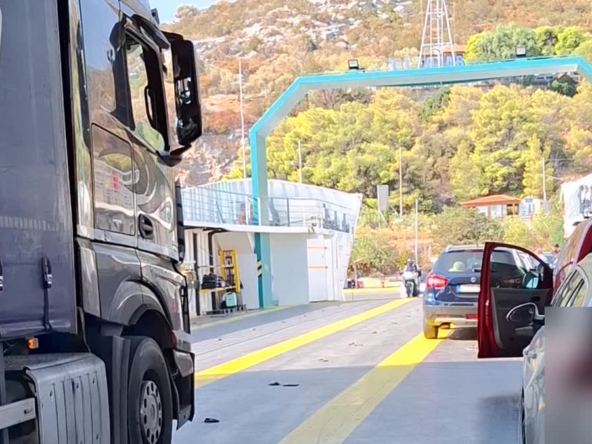
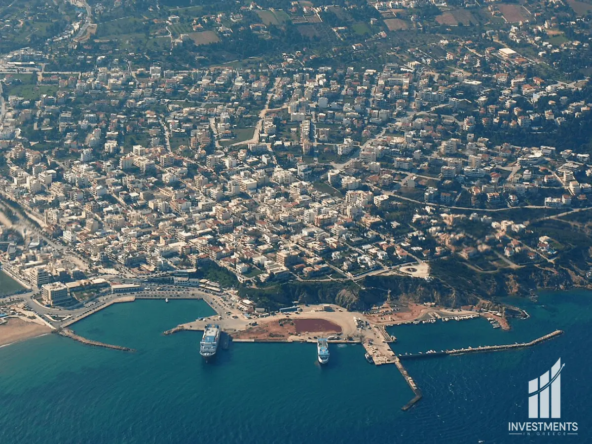
South Evia’s two entry ports Marmari, reached by ferry from Rafina, and Nea Styra, reached from Agia Marina, Marathon place South Evia within a ninety-minute door-to-door drive from Athens International Airport. Rafina itself sits right next to Athens Airport. This makes a buyer in Karystos or Marmari closer to Athens door-to-door than many of Athens’ own suburban neighborhoods.
And yet, South Evia property prices are only a fraction of coastal property prices in Attica, the Athens Riviera, or Mykonos. In January 2026, according to a market survey, the average property price across the Evia region stood at roughly €1,622 per square meter, an annual increase of 8.57%. Entry-level properties in terms of size and price are far below those that have priced people out of Athens’ southern suburbs.
2. Golden Visa Eligibility at the €400,000 Threshold
This is arguably the single most important structural advantage South Evia holds in 2026. Under Greece’s current Golden Visa policy, various regions have been classified into investment zones. High-demand areas including Attica (Athens), Thessaloniki, Mykonos, Santorini, as well as island communities with populations over 3,100 require a minimum property investment of €800,000 for five-year residence permits.
South Evia falls outside these high-demand zones. This means investments here qualify at the €400,000 threshold half the cost of an equivalent Golden Visa purchase in central Athens. For a buyer seeking European residency, visa-free travel within the Schengen area, and tangible real estate, South Evia delivers identical legal benefits to buying in Athens at half the entry price. It’s a gap that almost no English-language investment blog has fully articulated so far itself a sign of how open this market’s window of opportunity still is.
Additionally, properties involving commercial-to-residential conversion or restoration of listed buildings anywhere in Greece — including South Evia qualify at the even lower threshold of €250,000, making renovation projects in villages like Styra or Karystos especially attractive for budget-conscious Golden Visa applicants.
3. A Market With Genuine Price Momentum
Evia’s property market is not speculative or artificially inflated in its growth. The 8.57% year-over-year increase recorded in January 2026 comes on top of consistent multi-year appreciation, driven by genuine demand: Athenians seeking vacation homes, returning Greek diaspora buyers, and an accelerating wave of international buyers priced out of Attica. Rental yields across Evia are estimated at 4%–6% annually, with well-located southern coastal properties yielding towards the higher end, especially during Greece’s long summer season.
South Evia Towns: Where to Focus
South Evia is not a single monolithic market. Understanding its distinct towns helps investors identify the right entry point.
Karystos
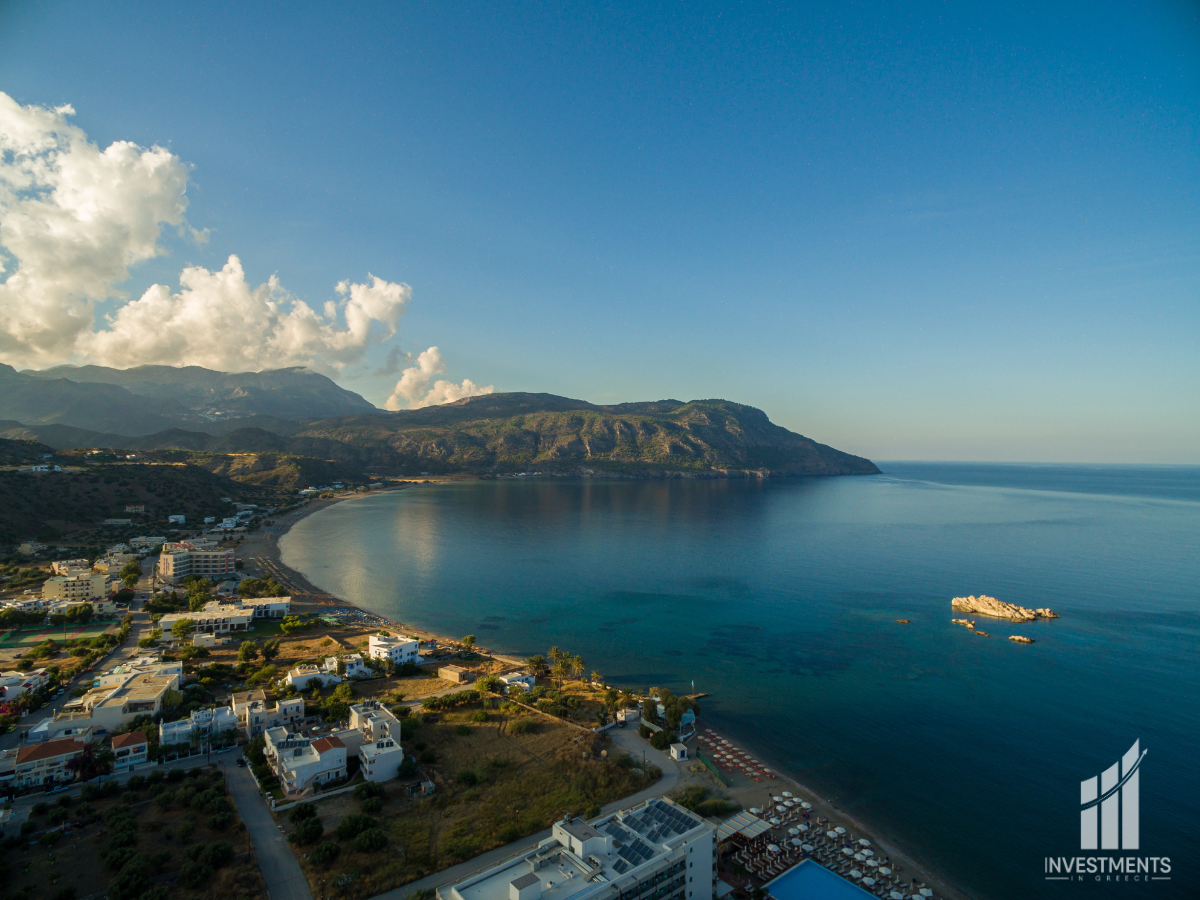
South Evia’s most significant town, Karystos, sits on a broad bay at the foot of Mount Ochi, facing the Aegean Sea. It’s one of the region’s most picturesque seaside towns, dotted with tavernas and home to the 13th-century Venetian Bourtzi fortress on its eastern shore. Karystos has drawn international attention in recent years as a destination in the genuine Cycladic-island style without Cycladic prices. Seaside plots here, some beachfront, have begun appearing on international platforms like Rightmove, signaling growing external demand. The Likorema area near Karystos has become especially sought-after, with new environmentally conscious construction and A-energy-rated properties entering the market for buyers seeking both green certification and investment value.
Marmari
A short distance from Karystos, Marmari is a genuine fishing village, the kind of coastal community that mass tourism has largely bypassed. It connects directly to Rafina (and therefore Athens Airport) via a one-hour ferry, making it one of Greece’s most accessible coastal villages relative to the capital. Long-term rental demand here is stable, driven by local workers and returning diaspora members. Vacation rental potential is strong, though investors should note that under current Golden Visa regulations, short-term rentals (Airbnb-style) are not permitted on Golden Visa properties; only long-term leasing is allowed.
Nea Styra
Nea Styra is the port connecting South Evia to Agia Marina on the Marathon coast, a 45-minute ferry ride that drops passengers directly into one of Attica’s most accessible coastal areas. The waterfront area and the Dilesi neighborhood have shown considerable land-sale activity, with some of the larger available plots offering stunning views over the Evoikos Gulf. This is a fast-moving market, provided the property is priced correctly; local real estate agents report recent record-value purchases of waterfront plots.
Styra and the Dragon Houses
Unlike other investment markets, the village of Styra, located inland above Nea Styra, offers access to a unique cultural experience: the mysterious Dragon Houses (Drakospita) of Mount Ochi. These megalithic structures are built from giant slabs of schist stone and predate classical Greek civilization, making them one of the most fascinating archaeological sites in the Aegean region. To this day, no one has been able to conclusively explain why or how these houses were built. For investors seeking cultural cachet, whether through private ownership or small-scale tourism facility development, Styra offers a story unmatched by any Athens apartment. Alongside these historic houses are also historic marble quarries, where designs have been found and dated to roughly 2,000 years ago.
What Types of Properties Are Available in South Evia?
The South Evia market is diverse enough to suit multiple investor profiles:
Waterfront and sea-view plots are the most sought-after property type. Buildable plots ranging from 1,000 square meters to several thousand square meters are available along the coastline, some with existing building permits, others requiring a permit application. Prices depend heavily on the property’s proximity to the water, access-road quality, and existing development approval.
Villas and houses range from traditional stone properties requiring renovation to new-build homes with modern energy certifications. The Likorema area, near Karystos, is seeing numerous new A-rated eco-residential projects.
Large agricultural and rural plots are available for buyers interested in establishing their own agritourism businesses — olive groves, wine estates, and working agricultural properties. The Dimosaris Gorge area in Karystos, for example, offers dramatic canyon views that draw hikers.
Conversion projects can help meet the €250,000 Golden Visa threshold and create an appealing selling point for investors willing to undertake renovation. Several such opportunities exist in South Evia’s villages.
The Lifestyle Portfolio: Why Buyers Fall in Love With South Evia
The numbers tell part of the story. But South Evia can simply be considered a picturesque, functional, and livable region, an important factor for vacation-home and rental owners in terms of profit and resale potential.
The southern part of Evia island resembles the Cyclades far more than the forested north; its mountainous-limestone terrain descends toward the blue Aegean coastline. Mount Ochi, the region’s highest point, offers excellent hiking trails along its slopes, from which breathtaking coastal views can be enjoyed. One of the region’s best hiking routes is the Dimosaris Gorge, connecting the mountains to the sea through natural pools and waterfalls, ending at Kalyvia beach.
Nothing here is manufactured; this is authentic Greece, with cuisine built on fresh seafood from the Evian Gulf, local olive oil, honey, and wine from estates like Montofoli winery near Karystos. This is the daily rhythm of local residents, and what many buyers from Northern Europe and North America are looking for as a respite from the commodified islands of the Aegean.
Practical Steps for Foreign Investors in 2026
Purchasing property in South Evia as a foreign national follows standard Greek property-purchase procedures. The key steps include:
Obtaining a Greek tax registration number (AFM) required for all property transactions. Appointing an independent Greek lawyer to conduct title searches and due diligence. Appointing a notary for the official purchase agreement. Paying a property transfer tax of 3.09% of the property’s value (VAT is suspended on new construction through the end of 2026). Registering the property at the local land registry.
For a Golden Visa application, the investment must come from personal resources, since loans are not counted toward investment purposes. The application must also be submitted through Greece’s MIDAS system, which has made the overall process easier than before.
It’s also important for foreign nationals to consider the ENFIA property tax, taxes on rental income, and the permitted uses of properties under the Golden Visa program. It’s strongly recommended to work with a firm experienced in Greek investment-immigration law.
Evia Island 2026: The Verdict
Genuine price momentum, structural Golden Visa advantages over higher-priced regions, a lifestyle offering that is gaining international recognition, and a level of content and attention from the broader market that still falls well short of the real opportunity on the ground.
Evia, Greece, as a whole, is the largest Greek island that most people have never seriously considered investing in. South Evia, specifically offering seaside plots in Karystos, the charm of Marmari, access via the port of Nea Styra, and the historic appeal of Mount Ochi’s Dragon Houses, is a market that will reward those early enough to recognize what to look for.
The buyers who were first to move on the Athens Riviera back in 2018 provide a clear example. Today, South Evia has all the same indicators: rising property values from a low starting point, growing outside interest, real value for those seeking a better lifestyle, and ultimately, a window of opportunity that won’t stay open forever.
If you’re considering investing in Evia Island in 2026, the real question isn’t whether South Evia represents a good opportunity. The question is whether to act on it before the rest of the market does.