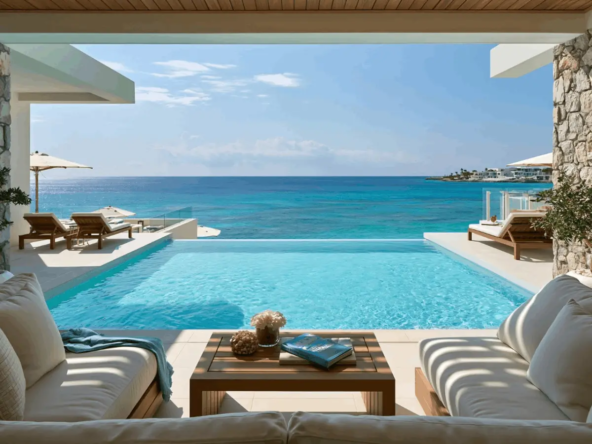


Greece is the better Golden Visa for investors who want a property they can use, a decision in months rather than years, and no minimum stay. Portugal is the better choice mainly if a European passport is the goal and you can wait ten years or more. Portugal removed property from its program in October 2023.
Portugal was the first choice of most investors seeking a European residence permit for about ten years, thanks to affordability, simple rules, and the climate. Greece sat in the background as the cheaper alternative. That order has changed. The Greece vs Portugal Golden Visa question now comes up in nearly every first meeting with an investor, and the answer is no longer obvious. Portugal closed its real estate route, its approval queue is very long, and its path to citizenship has doubled in length. Greece raised its prices, but it kept property as a direct way in, and it still decides cases much faster.
What changed in Portugal?
Portugal’s Golden Visa started in 2012, and for most of its life the main route was property. That route closed in October 2023. Today an investor must choose a regulated investment fund (from €500,000), a cultural donation (from about €250,000), scientific research (€500,000) or a business that creates jobs. Buying property in Portugal is still possible, but it no longer qualifies for the visa.
This matters more than it sounds. A fund is a financial product, not a home. You cannot live in it, rent it out or give your children a place to stay in it. Some investors are comfortable with that. Many are not, especially families who wanted something they could see and use. In Greece you can still qualify by buying an apartment or a house.
Then came the delays. AIMA, Portugal’s immigration agency, replaced the old border service in late 2023 and inherited a large backlog. The law says Golden Visa applications should be decided within 90 days. In practice, IMI Daily’s second-quarter 2026 survey put the average wait for completed files at a record 50.4 months. That figure measures finished files, so clearing the oldest cases pushes it up before it can come down.
On 7 October 2026 the Minister of the Presidency told a parliamentary committee that AIMA had processed 6,000 of the 46,000 pending Golden Visa applications, about 13 per cent. Practitioners now quote 14 to 18 months for a new filing, which is an estimate and not a guarantee.
Greece vs Portugal Golden Visa: how do the main rules compare?
| Greece | Portugal | |
|---|---|---|
| Main route | Real estate | Funds, donations, research, job-creating business |
| Minimum investment | €800,000 (Attica, Thessaloniki, Mykonos, Santorini, islands over 3,100 residents); €400,000 elsewhere; €250,000 for conversions and listed-building restorations or an Elevate Greece startup | From €500,000 for a fund; about €250,000 for a cultural donation |
| Property size | At least 120 m² in the two main tiers, single property | Property no longer qualifies |
| Minimum stay | None | About 7 days a year on average |
| Permit | Renewable five-year permit | Residence card, renewable |
| Family | Spouse, children and the parents of both spouses | Spouse and dependent children |
| Citizenship | After 7 years of lawful residence, with physical presence and language requirements | 10 years from first residence card (since 19 May 2026) |
| Decision time | Law says 2 months; real cases take months | Law says 90 days; averages above 3 years for old files |
In Greece the property tiers work like this. For Attica (Athens), the Thessaloniki regional unit, Mykonos, Santorini and islands with more than 3,100 inhabitants, the minimum is €800,000. For the rest of the country, including most of the mainland, the Peloponnese, Crete and many smaller Aegean islands, it is €400,000. For commercial buildings converted to residential use, or listed-building restorations, it is €250,000. Startups registered with Elevate Greece have a separate €250,000 route. Greece also accepts regulated funds, bonds and bank deposits, but real estate makes up the large majority of applications.
On time in the country, Portugal expects about seven days a year on average. Greece sets no minimum stay to obtain or renew the permit. One caution: if you spend more than 183 days a year in Greece you become a Greek tax resident. The permit itself creates no tax duty, but your own calendar can.
On renting, Greece has one firm rule. Properties bought under the new tiers cannot be used for short-term rentals such as Airbnb. A violation can bring a fine of €50,000 and loss of the permit, and compliance is checked against the tax authority’s short-term rental registry. Long-term rentals are allowed. Both countries give a residence card that allows visa-free travel across the Schengen Area.
Why does property in Greece still attract investors?
A property is something a family can use. It can be a holiday home, a base for a child studying in Europe or a long-term rental. Athens remains the most active market, though it now sits in the €800,000 tier. Outside the expensive zones, €400,000 opens a wide choice of cities and islands, from Crete to the north of the country.
When the choice comes down to lifestyle, Greece tends to win with people who plan to visit often and want a place of their own. A flight of about two hours from Tel Aviv to Athens, the Greek summer and the food are practical points as much as pleasant ones. Israeli investors are already among the larger groups of Greek Golden Visa holders, after Chinese and Turkish nationals.
Which Golden Visa is faster, Greece or Portugal?
Greece is faster. The Greek law sets a two-month decision period, and real timelines are longer than that, but they are measured in months, not years. One analysis of Ministry of Migration data found that 61 per cent of files filed in February 2026 had a decision by August. Compare that with the 50.4-month average for completed Portuguese files. For someone who wants a permit in hand within a year or two, the difference decides the matter.
A fair caution applies. Unlike Portugal, Greece has no enforceable decision deadline in practice, so delays are possible. To reduce that risk, prepare before you file: clear ownership of the property, complete bank documentation and a local lawyer. On processing speed alone, Greece comes out ahead.
Is Greece really gaining ground?
It is worth being precise. Greece has not grown in raw numbers. According to Ministry of Migration data, new applications fell from 4,553 in the first half of 2025 to 2,551 in the first half of 2026, after the thresholds went up. Part of that drop is a return to normal after the rush to file before the 2024 increase. At the same time, permits issued in the first half of 2026 rose 21 per cent to 4,919, and by the end of July 2026 Greece had 34,278 active investor permits. The backlog of pending files, investors and family members together, fell from more than 52,000 at the start of 2025 to 29,273 at the end of July 2026.
What has shifted is how investors choose. Fewer people buy the cheapest possible property just to get a card. More are asking which country will treat their money and their time better over the next five to ten years. On that question, Greece scores well on property, speed, and freedom from a stay requirement, and Portugal scores well on one thing: citizenship.
Which country is better for citizenship?
Portugal still leads on citizenship, though less than before. Parliament voted on 1 April 2026 to extend the residence period for most applicants from five years to ten, and the new law took effect on 19 May 2026. The ten years run from the date the first residence card is issued, so processing delays push the clock back month for month. Permanent residence is still available after five years, and nationality applications already pending on 18 May 2026 continue under the old rules.
Greece works differently. Greek citizenship can be granted after seven years of lawful residence, but you must be physically present in the country and meet language requirements. Most Greek Golden Visa holders treat the permit as a way to live in and travel through Europe, not as a route to a passport. So on citizenship, the choice depends on your goal. If a passport is the aim and you can accept a decade or more, Portugal still has the better answer.
Who should choose Greece, and who should choose Portugal?
Choose Greece if you want a physical property, a permit within months, no requirement to live there and a place for family holidays. It also suits investors who value a lower entry point outside Athens and the expensive islands.
Choose Portugal if your main goal is a European passport, you are comfortable holding a fund and you can wait.
Anyone who needs a residence card quickly, for business or school reasons, should think twice before joining Portugal’s current queue. Spain closed its Golden Visa in April 2025, so that option is gone. Before deciding between Greece and Portugal, write down what you want the visa to do for you within the next three years.
Frequently asked questions
What is the minimum investment for the Greece Golden Visa in 2026?
€800,000 in Attica, the Thessaloniki regional unit, Mykonos, Santorini and islands with more than 3,100 residents. €400,000 in the rest of Greece. €250,000 for converting a commercial building to residential use or restoring a listed building. Both main tiers require a single property of at least 120 m².
Can you still buy property for the Portugal Golden Visa?
No. Portugal removed real estate from the program in October 2023. Qualifying routes are regulated funds, cultural donations, scientific research and job-creating businesses.
How long does the Portugal Golden Visa take?
The legal deadline is 90 days, but IMI Daily’s Q2 2026 survey put the average for completed files at 50.4 months. Practitioners quote 14 to 18 months for new filings, which is an estimate and not a guarantee.
Does the Greece Golden Visa require living in Greece?
No. There is no minimum stay to obtain or renew the permit. Spending more than 183 days a year in Greece makes you a Greek tax resident.
Can I rent out a Golden Visa property in Greece?
Long-term rentals are allowed. Short-term rentals such as Airbnb are banned for properties bought under the current tiers, with a €50,000 fine and possible loss of the permit.
How long until citizenship in Greece and Portugal?
Greece allows citizenship after seven years of lawful residence, with physical presence and language requirements. Portugal now requires ten years for most applicants, counted from the first residence card.
Conclusion
The Greece vs Portugal Golden Visa choice is not about which country is better in general. It is about which trade-offs you can live with. Portugal offers the longer road to a passport, but with a slow queue and a fund-only investment. Greece now asks for more money than before, and in return it gives you property, quicker decisions and visa-free access across Schengen. Rules in both countries change often. Before signing anything, confirm the current minimums with a licensed lawyer, and check the property’s title deed, permits and the processing times.
This article is general information, not legal or immigration advice.